
Beyond Stars and Screens: Five Sci-Fi Series That Redefined Genre Innovation Last Decade
The last decade has been a fertile ground for science fiction television, moving beyond spectacle to profound narrative depths. This era saw a significant evolution, with shows tackling complex themes from artificial intelligence to societal control, pushing boundaries of traditional storytelling. These series not only entertained but also instigated crucial conversations, reflecting and shaping our understanding of technology and humanity’s future.
Science fiction has always served as a mirror to contemporary society, extrapolating current trends and anxieties into imaginative futures. In recent years, this reflection has grown sharper, with shows leveraging advanced visual effects and sophisticated writing to explore philosophical dilemmas, ethical quandaries, and the very nature of existence. The impact extends to the scientific community, prompting discussions on AI ethics, quantum physics, and even the future of space colonization, while also influencing popular culture and technological discourse. Audiences and critics alike have engaged in fervent debates over narrative complexity, character development, and the thematic relevance of these new shows. They are key to understanding how our collective imagination grapples with rapid technological advancement and societal change. What impact would it have on our understanding or practice of speculative storytelling and technological ethics if we failed to fully comprehend these genre-redefining works?
The Expanse: Hard Science, Human Drama
Unpacking Realistic Space Opera and Political Intrigue
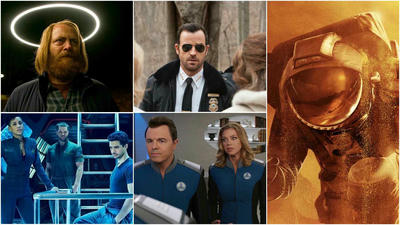
The Expanse, based on James S.A. Corey's novels, masterfully redefined space opera by grounding it in scientific realism (hard sci-fi). Unlike many predecessors, it meticulously portrays the physics of space travel—such as the need for continuous thrust for artificial gravity or the brutal G-forces experienced during maneuvers. This commitment to verisimilitude extends to its depiction of a colonized solar system, where humanity is divided into Earth, Mars, and the resource-rich but exploited Belt.
The series shines in its exploration of interstellar geopolitics, presenting a complex web of alliances, rivalries, and class struggles. The fragile peace between Earth, Mars, and the Belters (inhabitants of the Asteroid Belt and outer moons) constantly threatens to unravel, driven by scarce resources and historical grievances. A compelling example is the Protomolecule storyline, an alien technology that acts as a catalyst for both scientific wonder and catastrophic conflict, forcing humanity to confront its own prejudices and limitations. The show uses this narrative device to examine how first contact might truly unfold, not as a singular event, but as a series of cascading political, military, and ethical dilemmas across multiple factions. The impact of this alien artifact drives much of the series' overarching mystery and propels its diverse cast into increasingly perilous situations, from diplomatic standoffs to desperate battles, all while maintaining a believable adherence to established scientific principles and human behavior.
Black Mirror: Speculative Tech, Bleak Reality
Dissecting Near-Future Dystopias and Societal Warnings
Black Mirror is an anthology series that brilliantly leverages speculative fiction to explore the potential dark sides of burgeoning technologies. Each standalone episode presents a "what if" scenario, pushing current technological trends to their dystopian extremes. It dissects themes like pervasive surveillance, artificial intelligence, virtual reality, and social media’s influence on human connection. The series' core strength lies in its ability to feel disturbingly plausible, acting as a modern-day Twilight Zone but with technology as its central antagonist.
For instance, episodes like "Nosedive" illustrate a society obsessed with social ranking through an app, demonstrating how digital validation can dictate every aspect of life, from housing to employment. "San Junipero," while often seen as more optimistic, still explores the ethical complexities of digital consciousness and simulated afterlives. The show doesn't just critique technology itself; it critiques human nature's susceptibility to its allure and misuse. This critical lens has sparked widespread discussions globally, forcing audiences to reflect on their own engagement with technology. The series often presents uncomfortable truths, showing how innovations designed for convenience or connection can inadvertently lead to isolation or control.
| Episode Title | Core Technology | Societal Impact Explored |
|---|---|---|
| Nosedive | Social Rating App | Extreme social conformity, digital validation |
| USS Callister | Virtual Reality | Digital immortality, creator control, abuse |
| Hated in the Nation | AI Drone Bees | Online vigilantism, weaponized surveillance |
This table highlights how the show consistently intertwines specific technological advancements with their profound, often negative, societal ramifications. The data reflects Black Mirror's consistent focus on extrapolating present-day digital anxieties into fully realized, unsettling future scenarios, urging caution about the ethical frameworks governing technological progression.
Severance: Identity, Control, and Corporate Dystopia

Exploring the Ethics of Mind-Wiping and Work-Life Segregation
Severance redefined psychological sci-fi with its chillingly unique premise: employees undergo a surgical procedure that irrevocably separates their non-work memories ("innie") from their work memories ("outie"). This concept meticulously explores profound questions of identity, consciousness, and autonomy. The series is set within Lumon Industries, a mysterious corporation where this "severance" procedure is mandatory, creating a terrifyingly literal work-life balance that dissects the self into two distinct, unaware entities.
The show's brilliance lies in its meticulous world-building within the confined, sterile environment of Lumon. It creates an atmosphere of unease and corporate dread, where the severed employees (innies) are essentially prisoners to their jobs, living an entire existence solely within the office walls, without any knowledge of their outside lives. This setup allows for a deep dive into the psychological impact of such a division, portraying the innies' struggle for freedom and self-discovery against the backdrop of oppressive corporate control. A prime example is the character of Mark Scout, whose "innie" grapples with the existential horror of his existence while his "outie" uses the procedure to escape grief. The series uses this deeply unsettling premise to highlight the dehumanizing aspects of extreme corporate culture and the fundamental ethical dilemmas surrounding altering human consciousness.
Conclusion
The last decade witnessed a remarkable renaissance in science fiction television, transcending mere entertainment to become a powerful vehicle for social commentary and philosophical inquiry. Shows like The Expanse grounded space opera in scientific realism and political depth, demonstrating humanity's struggles on an interstellar scale. Black Mirror served as a poignant, often terrifying, anthology, using speculative technology to dissect our contemporary anxieties about surveillance, social media, and AI. Severance delved into the unsettling ethics of corporate control and fractured identity through its unique mind-wiping premise. While not detailed in a dedicated chapter above, Dark masterfully redefined time-travel narratives with its intricate, multi-generational mysteries, and Andor brought a gritty, politically charged realism to an established universe, proving that even familiar franchises can be profoundly reimagined. Together, these series have not only expanded the visual and narrative possibilities of sci-fi but have also deepened its capacity to reflect on humanity's present challenges and future trajectories. They stand as testaments to the genre's enduring power to challenge, provoke, and inspire, solidifying its place as a critical lens through which we understand ourselves and the technological world we inhabit.
Looking ahead, the trajectory of science fiction television appears poised for even greater innovation and thematic complexity. Future trends will likely see a continued emphasis on "hard sci-fi" elements, pushing for more scientifically plausible narratives while exploring the ethical implications of emerging technologies like advanced synthetic biology, quantum computing, and true artificial general intelligence. The impact of macro scientific policies, particularly those related to space exploration or AI regulation, will undoubtedly find resonance in future narratives. Furthermore, technological iterations in virtual production and CGI will enable creators to realize even more ambitious and immersive worlds. We can anticipate greater interdisciplinary integration, with shows drawing inspiration from fields like neuroscience, philosophy, and anthropology to craft narratives that are both intellectually rigorous and emotionally resonant. Challenges remain, particularly in balancing intricate storytelling with broad audience appeal and avoiding technological obsolescence in rapidly evolving landscapes. Continuous research into these areas, both within the creative industries and scientific communities, is vital. The next decade promises a new wave of sci-fi that will continue to challenge our perceptions, inspire new discoveries, and perhaps, even guide humanity towards a more conscious future.